ByJohn A
Understanding the Future of Artificial Intelligence and Technology
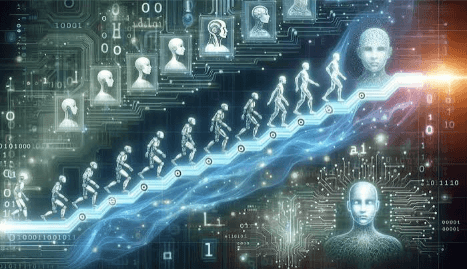
Understanding the future of AI and technology requires a careful balance of capability, deployment, and impact. As systems grow more capable, their roles in work, learning, and daily routines will shift—not only through automation but through new forms of collaboration. Ethical guardrails, data provenance, and governance must accompany progress to prevent erosion of trust. The coming era invites examination of standards, skills, and auditing mechanisms, offering a cautious path forward that invites further inquiry.
What AI Is Now and What It Isn’t
What AI is now—and isn’t—depends on the lens through which it is viewed: capability, deployment, and impact.
The analysis observes AI limitations as intrinsic boundaries, while statistical reasoning reveals probabilistic strengths and blind spots.
Ethics implications emerge from design and use, not intention alone, prompting scrutiny of data provenance.
A forward-looking framework seeks clarity, freedom, and responsible exploration.
How AI Will Transform Work, Learning, and Daily Life
AI is poised to reshape work, learning, and daily life by redefining how tasks are prioritized, how knowledge is acquired, and how routines are managed.
In this speculative landscape, AI陪伴 becomes a collaborative partner, elevating autonomy and creativity while work再设计 streamlines roles and workflows.
Learners adapt through personalized inquiry, pursuing freedom within structured systems that empower efficient, purposeful everyday innovation.
Risks, Ethics, and Privacy in a Smarter World
As smarter systems become more embedded in daily life, the risks, ethics, and privacy challenges they pose demand rigorous evaluation beyond immediate benefits, with attention to governance, accountability, and the distribution of power.
The emerging landscape suggests privacy erosion and bias amplification as persistent frictions, prompting safeguards, transparent auditing, and norms that empower individuals while preserving innovation, equity, and collective autonomy.
Navigating Adoption: Skills, Standards, and Milestones for the Future
Navigating adoption in a rapidly evolving landscape requires a clear map of skills, standards, and milestones that can translate ambitious capabilities into reliable, scalable practice.
The analysis projects a forward trajectory where skills adoption accelerates through modular training, interoperable frameworks, and continuous certification.
Standards milestones enable cross-sector trust, reducing risk while fueling experimentation, adaptability, and strategic freedom for organizations pursuing transformative AI-enabled futures.
Frequently Asked Questions
How Will AI Impact Creativity and Human Expression in the Long Term?
AI may expand creativity boundaries, reshaping human storytelling while preserving ambiguity; it acts as a collaborator that amplifies imagination, yet requires discernment. Over time, expression evolves collectively, balancing automation with authentic intent, preserving freedom amid speculative, analytical exploration.
What New Jobs Will Emerge That We Cannot yet Name?
Unanticipated roles will emerge as hybrids of intuition and algorithmic calibration, while future work reorganizes itself around humane ambiguity. The landscape juxtaposes automation’s precision with spontaneous collaboration, offering freedom-driven, speculative pathways for roles humanity has yet to name.
Can AI Develop Genuine Empathy or Consciousness Someday?
AI may simulate empathy, but genuine consciousness remains uncertain; outcomes hinge on breakthroughs in empathy psychology and consciousness ethics, where speculative analyses consider whether subjective experience arises from computation or experiential substrates, guiding a future oriented toward autonomous, liberty-conscious design.
How Will AI Influence Global Inequality and Access to Technology?
A metaphorical pinprick—one classroom with a laptop proves one child’s access can redefine a nation. Global inequality worsens without universal technology access, even as new job emergence arises; AI empathy/consciousness remains debated, safeguards and human values guide cross-cultural use.
See also: techsslasshcom
What Safeguards Ensure AI Aligns With Human Values Across Cultures?
Safeguards alignment emerges from transparent governance and multi-stakeholder oversight, ensuring accountability and adaptability. Cross cultural ethics guide value alignment, demanding inclusive standards, ongoing auditing, and humility toward diverse human perspectives as AI systems evolve globally.
Conclusion
As systems grow more capable, the boundary between tool and collaborator blurs, leaving decisions increasingly shared between human judgment and machine insight. The trajectory promises unprecedented efficiency, learning, and autonomy, yet uncertainty threads through every milestone. Will governance, provenance, and ethics keep pace with capability, or will blind spots reshape risk into consequence? The coming era hinges on disciplined experimentation coupled with transparent auditing—where progress is measured not only in speed, but in trust whispered into every deployed solution. The future remains quietly compelling, perilously unfolding.